From one seed-swap afternoon brief to posts, images, and a short video…
페이지 정보
작성자 Hyman 작성일26-10-03 11:27 조회7회 댓글0건관련링크
본문
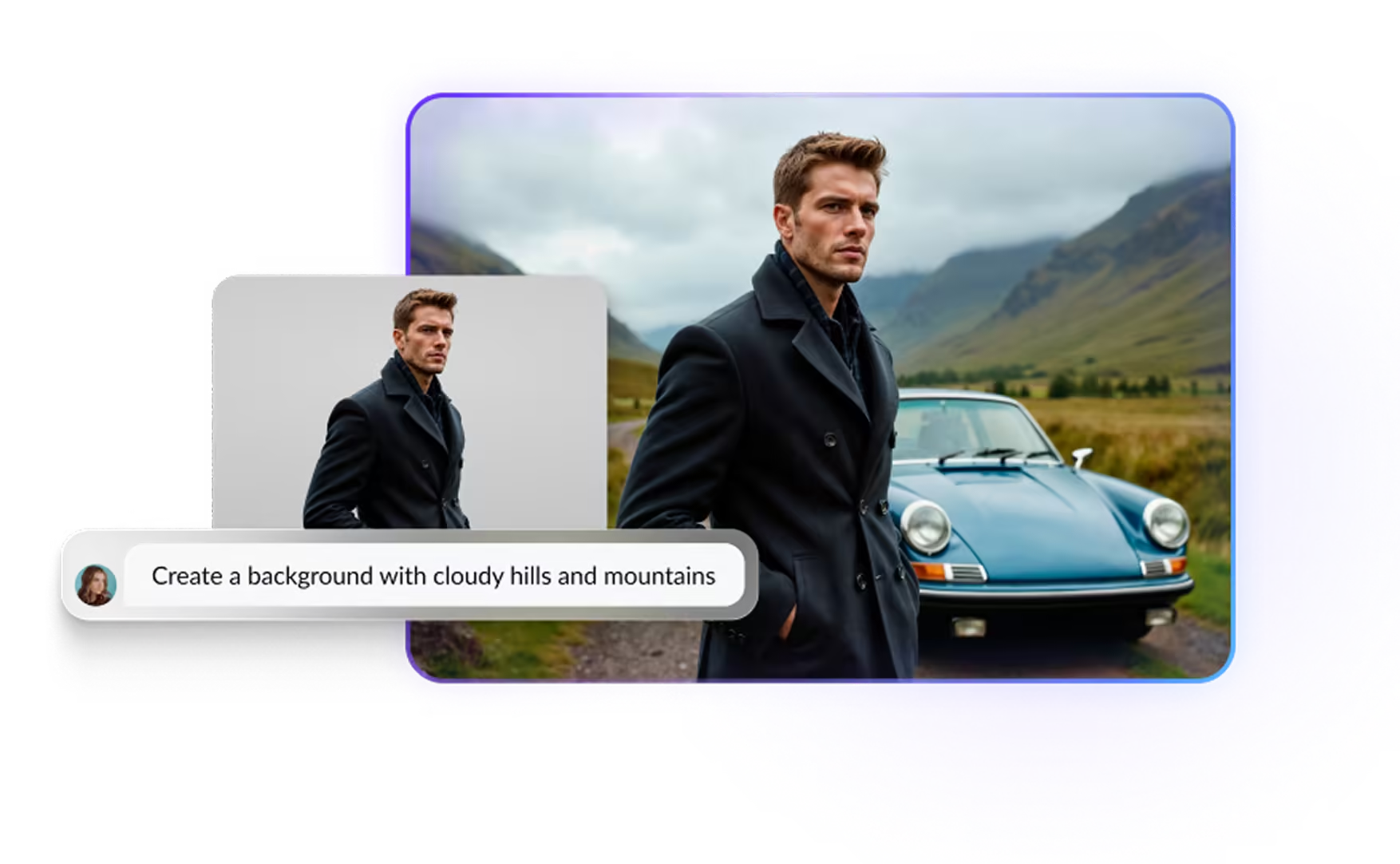
Publication day is close, and the community garden has only scattered notes for its seed-swap afternoon. A decorative idea without a clear path for apartment residents to reply to attend will waste the small team's time. An approach centered on audience onboarding keeps the story focused, while deadline pressure supplies a concrete opening.
The working brief fits on one page: the community garden is promoting the seed-swap afternoon to apartment residents, and the single communication goal is to reply to attend. Tone is neighborly and earthy. Required inputs are approved wording, timing, cost, eligibility, delivery method, and contact path; unsupported results and false urgency are prohibited. Constraints specify spelling, mandatory and avoided terms, source permissions, the 9:16 ratio, safe zones, 30 seconds, file formats, responsible people, and release time. Approved facts are separated from questions and examples so assumptions cannot become public claims.
In the source brief, the assigned search phrase represents a need to move from a written idea to a controlled visual set. Success means repeatable compositions with room for real typography, not a large gallery of attractive drafts. It prevents a broad technology discussion from replacing the work needed for the seed-swap afternoon.
The first writing pass produces four message routes, not a pile of final captions. Four routes expose deadline pressure, show a three-step method, compare responsible choices, or document one decision at the community garden. Selection follows the audience onboarding goal and rejects any route that needs a fabricated customer result.
A vertical script capped at 30 seconds shows one decision, from loose notes about the seed-swap afternoon to a reviewed asset. The opener uses three seconds: Generate AI images spoken context about deadline pressure, a short caption, and a tight shot of source notes. Shot two collects inputs for four seconds; shot three shows the illustrative choice for six; shot four pauses on a human correction for five; shot five uses the remaining time for the approved next step. The shot sheet separates voiceover, on-screen text, direction, duration, source or assumption, and review note into six columns.
The image has one communication task: make the deadline legible without generated type for the seed-swap afternoon. Its prompt names the seed-swap afternoon, places the decision in the foreground, keeps support behind it, limits color to terracotta, sand, and dark brown, and requests 9:16. Upper and lower safe zones remain quiet for human-added type, while the central action stays readable at phone width. 'Quiet Start' and 'The Simple Route' are hypothetical options for internal layout testing, not claims of availability or proof.
The approved route expands into one explanation, a caption, a two-line hook, a five-card carousel, a voiceover, and three headline options. The carousel names the problem for apartment residents, gathers inputs, shows a hypothetical choice, runs a check, and finally asks people to reply to attend. A missing price, date, or eligibility detail becomes a question for the owner, never a confident sentence invented by the model. A line stays only if it provides a method, example, criterion, or risk that changes the work.
The schedule also reserves enough time for correction, source checks, and another careful final reading before any finished asset is queued. Production begins with the smallest complete set for the seed-swap afternoon: one master message, one adaptable composition, one caption family, and one timed demonstration. Approval happens before multiplication so a factual or visual mistake is corrected once rather than hunted across a folder of derivatives. A tracking row lists each asset, its purpose for apartment residents, source fact, format, status, next reviewer, and relationship to the action to reply to attend. After a small release, the owner compares observable signals chosen in advance, such as completed inquiries or saves, while keeping exposure and time period visible. The result informs the next audience onboarding decision but is not presented as universal proof, a guaranteed lift, or a customer testimonial. The operator uses descriptive file names, records approval beside the source, and separates superseded exports from current work; this reduces the chance that a polished rejection reaches a scheduled post. Before scheduling, the producer checks the actual derivatives in their destination previews for compression, crop, caption placement, links, and any change to the intended reading order.
Core facts stay fixed, while opening, order, pace, composition, and interaction are rebuilt for each destination. On a text feed, the producer explains the choice behind the seed-swap afternoon. An image feed foregrounds the visual task, while the carousel distributes the reasoning. Vertical video presents deadline pressure immediately and remains phone-safe. Long-form keeps the full comparison, while a community edit requests feedback before people reply to attend.
Generated material can fail through prompt churn, inconsistent subjects, and accidental text. A system may also change the subject between frames, deform text or interfaces, miss cultural meaning, imitate a familiar mark, or describe an example as a real result. An editor catches them by tracing claims to the source sheet, enlarging every image, and watching the final cut cold with sound off and then on.
First, a person verifies claims and changing rules with current primary sources, notes the date, and confirms that wording fits the audience and stated voice. At full size and on a phone, visual review covers spelling, repeated letters, icons, hands, object count, edges, shadows, interface logic, stray marks, contrast, reading order, safe zones, and every crop from 9:16. Motion review compares shots for continuity, verifies captions and spelling, checks pronunciation and levels, tests pace and safe areas, inspects opening and closing frames, and repeats the viewing muted. Final approval is recorded when the formats hold the same facts, maintain the stated neighborly and earthy tone, and make the next action appropriate for apartment residents.
The delivery record shows the path from confirmed material through approved message, editable design, timed script, and final files. A late correction can flow through the set without forcing the owner to reconstruct which draft supplied a claim. The community garden finishes with connected assets that can be checked and changed without pretending automation supplied judgment.
댓글목록
등록된 댓글이 없습니다.